
Postzmaker guide
Workplace greetings: coworkers, clients and your boss
A greeting at work should be warm without being awkward. Here is how to set the tone for a teammate, a client or a manager, which images look professional, when to send them, and what to leave out.
How to do it with Postzmaker
- Open the page for the occasion: Christmas, New Year, birthday or thank you.
- Pick a sober background: gold or watercolor look professional (minimal is available on the Thank You page), while a bright cartoon style suits a close team.
- Write a short title and one clear message, or tap ‘Another message’ until you find one that fits the relationship.
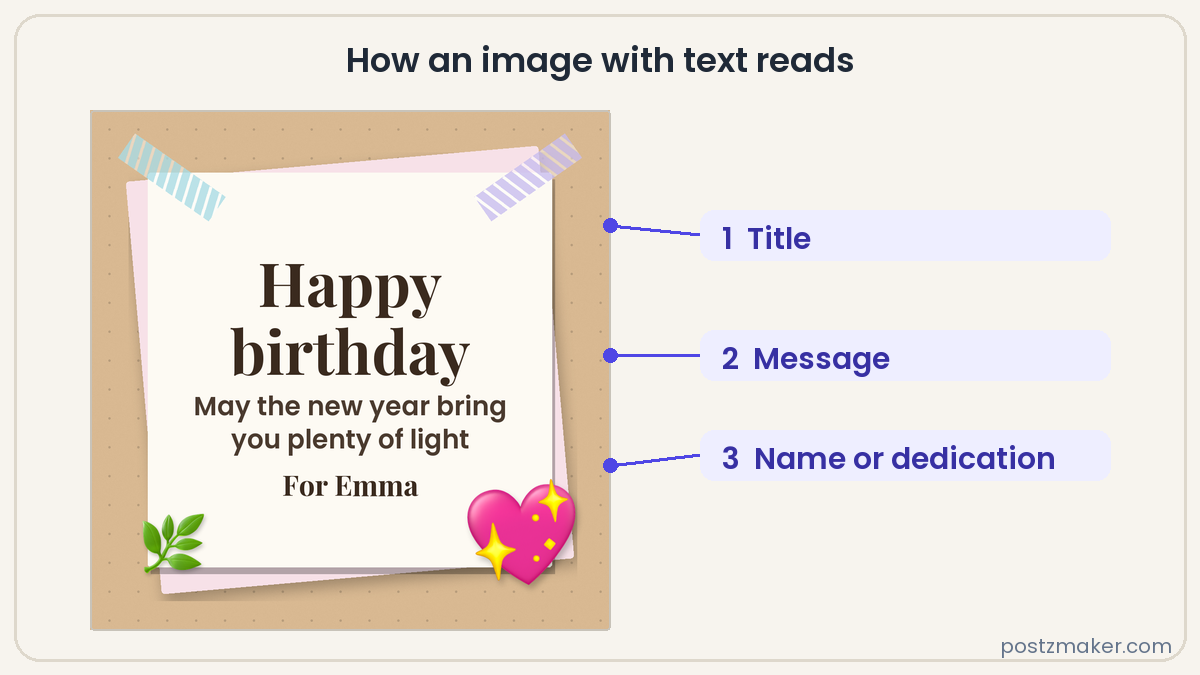
- Add the person’s name in the optional field, so the greeting is clearly meant for them and not a mass mailing.
- Choose Square (1080x1080) for chats and feeds, or download the JPG on a computer and attach it to an email.
- Add one sentence of your own, such as a thank-you for something specific, and sign with your real name.
Why workplace greetings are different
A greeting among friends can be silly, intimate or loud. A greeting at work is read by people with whom you share goals, deadlines and sometimes disagreements, and it may be forwarded, screenshotted or read in front of others. That is why it needs a bit more care.
Three questions help. How well do I know this person? What is the hierarchy between us? And through which channel will they receive it: a private chat, a team group, an email or a public post? A casual voice that works in a small team chat can seem wrong in an email to a client you have met once.
The best workplace greeting is brief, kind and specific. It acknowledges the person, mentions one real thing you appreciate and leaves out anything that could read as flattery, a request or a joke at someone’s expense. When in doubt, imagine the message printed and pinned to the office wall: would you still be comfortable with it?
Coworkers: warm and light
With teammates you see every day, you can be friendly and a little playful. ‘Happy birthday! Thanks for always having a spare charger’ shows that you notice the small things. Make the humor about something shared and kind, never about appearance, age, family or mistakes.
A joke that works with one colleague may not work with another, especially someone who has just joined, and a message that is too intimate can make people uncomfortable across levels or cultures. If you are unsure, choose a simpler and slightly more formal version.
For a group card, coordinate so the person does not receive twenty separate pictures. One shared picture with a name, and a thread where everyone writes a line, is more touching and less noisy.
- ‘Happy birthday, Dan. Thanks for making Monday meetings bearable.’
- ‘Congratulations on the project, Priya. It was a pleasure working with you.’
Clients and customers: courteous and specific
A client greeting shows that you remember the person behind the account. Skip the template that begins ‘Dear valued customer’ and mention the project, the year or a moment you shared. ‘Thank you for trusting us with the new website’ is far better than ‘Thank you for your business’.
Use a formal but warm tone, with a short line and your name or your company name at the bottom. Do not slip in offers, discounts or reminders of unpaid invoices. A greeting that sneaks in a sale loses its meaning, and clients notice. Keep commercial and personal messages separate, even if both go out in the same week.
A small business can make a lasting impression with a personal greeting to its top clients, which costs only a few minutes. With many clients, send a well-made generic message to the group and add personal notes to the most important ones. Spell names and titles correctly: a wrong name is worse than no message.
Your boss or manager: respectful, not flattering
Greeting someone above you in the hierarchy is delicate. A good message is respectful and sincere, without exaggerated praise. ‘Wishing you a wonderful birthday and a restful weekend’ is polite and enough. If you want to add something personal, mention a real moment, such as how they supported the team in a difficult week.
Avoid empty compliments. ‘You are the best boss in the world’ can seem insincere, especially if others can see it. Thank them for something concrete: ‘Thank you for trusting me with the new project.’ If you are not close to your boss, a short card signed by the whole team is a safe choice that spares everyone the awkwardness of writing alone.
If you are the manager, your greetings to the team carry weight. Mention individuals by name, thank them for something specific, and avoid copying the same message to everyone. A short, well-chosen sentence can motivate more than a long speech.
Choosing a sober image
In a professional setting the image should support the message without distracting. Gold backgrounds look elegant, watercolor is gentle and calm, and a clean winter or tree style suits end-of-year greetings. Bright cartoon styles and loud colors are better for close colleagues than for clients.
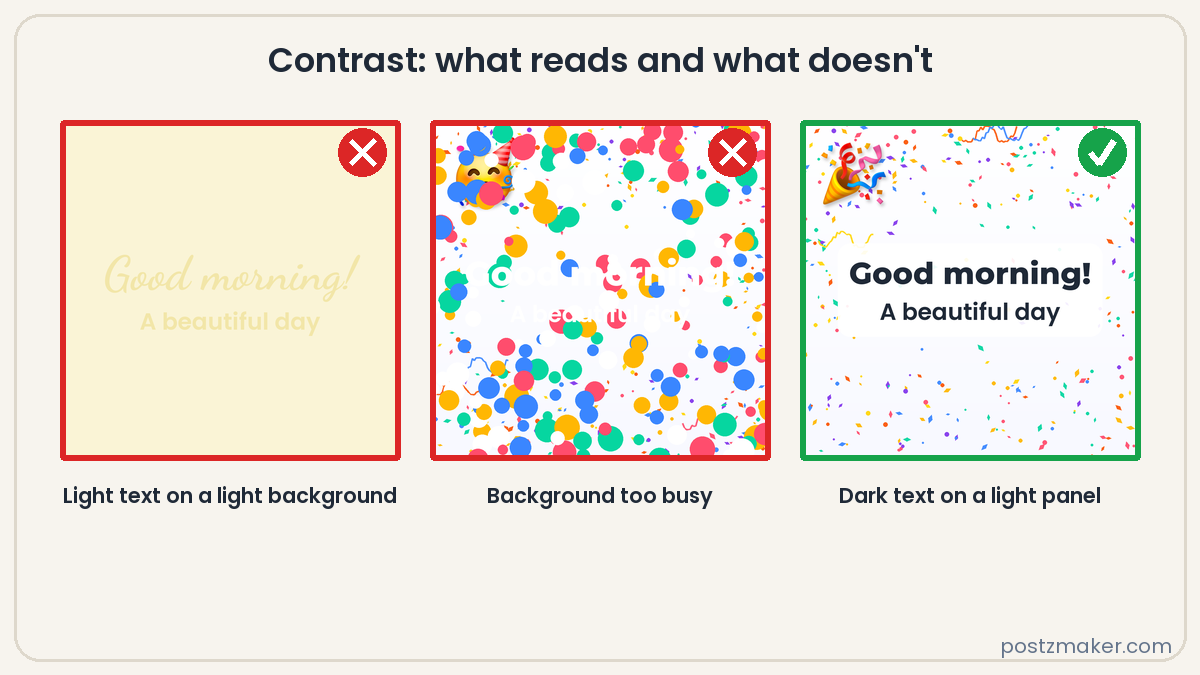
Keep the text short and the typeface clean. A sans-serif such as Inter or Montserrat looks neutral and professional, while Playfair Display adds a classic, formal touch. Use script fonts only for a single short word. Make sure the text contrasts strongly with the background, with generous space around it.
If your company has a logo, the full editor lets you add it as a brand mark; use it discreetly, at a small size. The goal is a greeting, not a banner. If a picture feels too decorative for the person, remove an element or choose a plainer style rather than adding more text.
Timing: when to send what
Work greetings are best sent during working hours. A message late in the evening or on a weekend can feel intrusive, even if kindly meant. For holiday greetings, choose a working day in the last week before the break; December 24 and 25 find most people busy with family.
For birthdays, send the message in the morning, so the person sees it as they begin their day. If you do not have the date, do not guess. If you are late, a short ‘Happy belated birthday’ is fine. For work anniversaries or promotions, send it on the day or the one after, so it feels timely.
Consider time zones if you work with international teams: a message that arrives at three in the morning is not a pleasant surprise. For a client on vacation, a message in the first days after they return is often more welcome than one waiting unread in a crowded inbox.
Formality: choosing the right level
A simple way to choose is to think in three levels. Formal: ‘Dear Mr. Lopez, I wish you a wonderful holiday season and a successful new year.’ Neutral: ‘Hello Maria, happy holidays and best wishes for the new year.’ Friendly: ‘Happy holidays, Sam! Thanks for a great year, and let’s have lunch in January.’
Use the level your counterpart uses with you. If they write ‘Dear Anna’, you can do the same; if they write ‘Hi!’, you can relax a little. If you are not sure, begin neutral and move toward friendly as the relationship develops. It is easier to become friendlier than to apologize for being too casual.
Cultural differences matter too. Some cultures prefer formal greetings with titles, others a quick, friendly note. When you write to someone in another country, keep it simple, avoid idioms and slang, and use full sentences. Short sentences also help readers who use a translation tool, which is common in international teams.
What to avoid in workplace greetings
Avoid jokes about politics, religion, weight, age, relationships or health. Avoid hidden requests: a greeting that ends with ‘By the way, did you review my report?’ spoils the message. Skip long personal confessions and anything that may embarrass the person if read by others.
Be careful with mass messages. An email sent to everyone with all addresses visible exposes your contacts and looks careless; use blind copy or send individual messages. Check names, titles and company spelling too.
You do not have to write to everyone. A few sincere messages beat many generic ones. Read your message aloud once: if it sounds like something you would say to the person in the corridor, it is probably right; if it sounds like a press release, shorten it and keep the one fact that matters. A sincere sentence of ten words is enough for most situations at work.
Examples: workplace greetings by relationship
- Happy birthday, Elena! Thank you for always answering the questions nobody else dares to ask.
- Dear Mr. Carter, thank you for a year of good collaboration. Wishing you a peaceful holiday and a successful new year.
- Happy holidays to the whole team. Thanks for the late nights, the good ideas and the shared snacks.
- Wishing you a wonderful birthday and a restful weekend. Thank you for your support this year.
- Congratulations on the new role, Nina. You have earned it, and I am looking forward to working with you.
- Thank you for trusting us with your project, Mr. Silva. We look forward to the year ahead together.
- Good luck with the presentation tomorrow, Tom. You know this material better than anyone.
- Happy new year, Hannah. May it bring fewer emails and more good surprises.
Try it now




Frequently asked questions
Should I send greetings to clients?
Yes, if the message is personal and genuine. A short note that mentions the project or a moment you shared is welcome, while a generic mass message can feel cold. Send it during working hours, use a calm picture, and keep offers, reminders and requests out of it. A sincere thank-you is enough.
How formal should a message to my boss be?
Polite and sincere, but not flattering. A short wish and a thank-you for something concrete is enough. Avoid exaggerated praise and jokes that could be misread. If your boss uses a friendly tone with you, you can respond in kind, but keep it professional, especially if the message is public or in a group.
Is it fine to use funny images at work?
With close colleagues who share your sense of humor, yes. With clients, managers or people you do not know well, choose a calm, elegant style with a short line. Avoid jokes about age, appearance or personal habits. If you are not sure, choose the sober option, because it is never wrong.
Can I use the same picture for the whole team and for clients?
Use a sober picture for both, but change the words. For the team, a warm line about a shared moment works. For clients, name the project or the year you worked together. Keep the name field personal in both cases, so nobody receives something that looks like a template. Do not forward the team version outside the team.
When should I send holiday wishes to colleagues?
On a working day in the last week before the break, preferably in the morning. Avoid December 24 and 25, and do not send them late at night. With international teams, check time zones and local holidays, because dates and customs differ between countries. A short, early message is better than a perfect one that arrives after everyone has left.
How can I personalize a greeting for many clients?
Choose a good generic picture and message, then add a personal sentence and the name of each person. Even one specific line, such as a reference to a project, changes the effect. Send messages separately, not in a mass email with visible addresses. A list of clients with a note on each one’s project makes personalizing quick, even for fifty people.
More guides
- How to Make Good Morning Images for WhatsApp
- How to Make a Greeting Card Online for Free
- How to Make a WhatsApp Status with Text and a Background
- How to Choose the Right Background, Colors and Font
- How to Write Original Greeting Messages That Sound Like You
- How to Prepare a Different Image for Each Day of the Week
- Birthday messages for every person on your list
- Christmas and New Year wishes: what to write, to whom and when
- Valentine’s Day messages that are not clichés
- Mother’s Day and Father’s Day: dates, messages and ideas
- Why WhatsApp images look blurry, and how to send them sharper
- How to Make Images Everyone Can Read
- Plan Your Year of Greeting Posts, Month by Month
- What to Write for Weddings, New Babies and Graduations
- Writing to Someone Who Is Unwell or Going Through a Hard Time
- How Holidays Differ Between Italy, Spain and English-Speaking Countries
- The Full Editor, Step by Step